How Technician Flat Vector Illustrations Enhance Visual Communication in Technical Contexts
Flat vector illustrations have become a cornerstone of modern visual design, especially in technical and service-oriented industries. Among these, Technician Flat Vector Illustrations serve a unique role in depicting repair, maintenance, and operational processes. These visuals are not just decorative—they are functional assets that help convey complex ideas with clarity and consistency. Whether used in a mobile app, website UI, or marketing flyer, these illustrations help bridge the gap between technical detail and user-friendly presentation.
Understanding Technician Flat Vector Illustrations
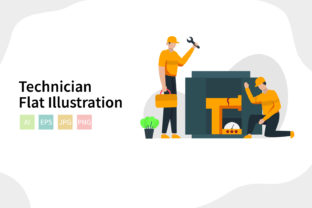
Technician Flat Vector Illustrations are simplified, two-dimensional graphics that depict professionals engaged in technical tasks such as repairing machinery, inspecting equipment, or troubleshooting systems. They are often part of a broader set of creative assets that include AI, EPS, JPG, and PNG formats, making them versatile for various digital and print applications.
These illustrations are typically designed using a limited color palette, clean lines, and minimal shading—hallmarks of flat design. This style enhances readability and ensures the focus remains on the core activity being illustrated, such as a technician repairing damage to goods and machinery.
When and How to Use Technician Flat Vector Illustrations
These illustrations can be integrated at multiple stages of a project or process. For example:
- Before a project – To help explain technical concepts during planning or pitch meetings.
- Duringservice delivery – To guide users through troubleshooting steps or maintenance procedures in apps or documentation.
- After a task – To summarize workflows or illustrate outcomes in reports or presentations.
Whether you're designing a user interface, preparing an infographic, or creating a marketing banner, these visuals help communicate technical themes in a way that's both professional and approachable.
Integration with Other Tools and Platforms
One of the strengths of Technician Flat Vector Illustrations is their adaptability. Since they are often available in AI and EPS formats, they can be edited and scaled without losing quality. This makes them compatible with design tools like Adobe Illustrator, Figma, and Sketch. Additionally, the JPG and PNG versions ensure they can be used across web platforms, CMS systems, and social media without compatibility issues.
They also work well alongside other visual elements such as:
- Infographics showing repair timelines or service metrics.
- Doodles or icons that represent different stages of a process.
- UI/UX components like buttons, progress bars, or status indicators.
Practical Implementation Tips
To get the most out of Technician Flat Vector Illustrations, consider the following workflow practices:
- Align visuals with content – Ensure the technician’s activity matches the context of the message, whether it's customer support, industrial repair, or educational content.
- Maintain visual consistency – Use illustrations from the same design family to preserve a cohesive look across your platform or publication.
- Optimize for performance – Use compressed PNG or JPG versions for web use to keep load times low without sacrificing quality.
- Test across devices – Confirm that the illustrations scale well and remain legible on mobile, tablet, and desktop screens.
Use Cases Across Industries
These illustrations are not limited to one specific field. They are widely applicable in:
- Manufacturing – To show equipment maintenance or quality control processes.
- Customer service – To visually represent support steps or resolution paths.
- Education – To make technical training materials more engaging and easier to follow.
- Marketing – In banners or landing pages that promote repair services or technical support packages.
Preparing for Long-Term Use
When incorporating Technician Flat Vector Illustrations into your design system or content strategy, it's important to think ahead. Store original vector files (AI or EPS) securely so they can be reused or modified as needed. Organize your illustration library by category and use case to streamline future projects.
Also, consider how these visuals fit into your brand’s tone and messaging. If your brand leans toward a more modern, minimal aesthetic, flat illustrations are an excellent choice. If your audience is more traditional, you might pair these visuals with more detailed graphics or real photos to balance familiarity and clarity.
Quality Control and Consistency
Consistency is key when using any visual asset across multiple platforms. Establish guidelines for how Technician Flat Vector Illustrations should be used—such as color matching, size standards, and alignment with text. This helps maintain a professional appearance and reinforces brand identity.
Regularly audit your visual assets to ensure they remain aligned with current design standards and project goals. If your team grows or your platform evolves, revisit your illustration strategy to ensure it continues to meet your needs effectively.
Conclusion
Technician Flat Vector Illustrations are more than just design elements—they are tools that support clear, effective communication in technical and service-oriented contexts. Whether you're building a user interface, developing training materials, or crafting a marketing campaign, these visuals offer a clean, scalable way to represent complex ideas in an accessible format. By integrating them thoughtfully into your workflow, you can enhance both the usability and appeal of your digital or print content.