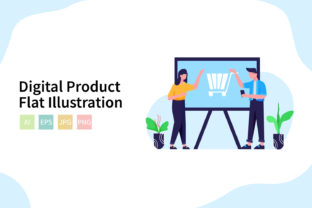
Digital Product Flat Vector Illustration: A Versatile Tool for Modern Design
Flat vector illustrations have become a cornerstone in digital design, especially in the realm of Digital Product Flat Vector Illustration. This style, known for its simplicity and clarity, is widely used across websites, mobile apps, editorial layouts, and marketing materials. Whether you're designing a banner, creating a UI element, or crafting a visual concept for a tech startup, flat vector illustrations offer flexibility and scalability that few other design formats can match.
Why Flat Vector Illustration Works for Digital Products
Flat design strips away unnecessary textures, shadows, and gradients, focusing instead on clean lines, bold colors, and clear shapes. This minimalistic approach makes it ideal for digital products where usability and fast loading times are essential. When you're working on a landing page or a mobile app interface, the clarity of flat illustration ensures that users can quickly understand the message without visual clutter.
For designers, flat vector illustration provides a structured yet creative canvas. You can easily manipulate shapes and colors using vector software like Adobe Illustrator, allowing for quick iterations and adjustments. This is particularly valuable when designing for responsive layouts or when multiple variations of an asset are needed—such as for different screen sizes or branding themes.
File Formats You Need: AI, EPS, JPG, PNG
When it comes to distributing or implementing flat vector illustrations, choosing the right file format is crucial. Each format serves a specific purpose:
- AI (Adobe Illustrator): Best for editing. Designers use AI files to tweak individual elements of a vector illustration.
- EPS (Encapsulated PostScript): A versatile format that supports both vector and bitmap graphics, ideal for printing and scaling.
- JPG (Joint Photographic Experts Group): Great for web use where file size is a concern, though it compresses images and loses quality.
- PNG (Portable Network Graphics): Maintains high quality and supports transparency, making it perfect for digital interfaces and overlays.
When working on a project like a banner or poster, it's common to start with AI or EPS files for scalability and finish with PNG or JPG for final delivery. Designers often keep multiple versions on hand to ensure compatibility across platforms and tools.
Applications Across Industries and Platforms
The Digital Product Flat Vector Illustration style has found a home in a wide range of industries. From business dashboards to educational apps, flat illustration helps communicate complex ideas in a visually digestible way. Here are some of the most common use cases:
- UI/UX Design: Icons, buttons, and interface elements benefit from the clean aesthetic of flat design, improving user interaction and engagement.
- Editorial and Infographics: Flat vector illustrations help break down data and narratives into visual stories that are easy to follow and share.
- Marketing Materials: Flyers, posters, and banners gain a modern edge with flat design, making them stand out in both print and digital formats.
- E-commerce Platforms: Product visuals, especially for digital goods or SaaS platforms, often use flat illustrations to highlight features and benefits.
Designers working on a mobile app or a website will often use flat vector illustrations as part of a larger visual language that includes typography, color schemes, and layout structures. The consistency of style helps reinforce brand identity while keeping the user experience intuitive.
Creating Flat Vector Illustrations: Tools and Techniques
Designing flat vector illustrations requires a balance of creativity and technical skill. Adobe Illustrator remains the industry standard, but there are also user-friendly tools like Figma, Sketch, and Inkscape that support vector illustration creation. Whether you're a seasoned professional or a beginner, the key is to focus on structure, color harmony, and clarity.
Here are a few practical tips:
- Start with a Grid: Grids help maintain alignment and proportion, which is crucial in flat design.
- Limit Your Color Palette: Use no more than 3–5 main colors to keep the design cohesive and modern.
- Use Rounded Corners: Rounded shapes add a friendly, approachable feel to your illustrations.
- Focus on Silhouettes: Clear, recognizable shapes make your illustrations more memorable and communicative.
For example, if you're designing a character for a technology themed concept, you might simplify facial features and clothing to focus on the core idea—like innovation or collaboration. This minimalist approach ensures the illustration supports the message rather than distracts from it.
Choosing the Right Illustration for Your Project
When selecting or commissioning a Digital Product Flat Vector Illustration, consider the following factors:
- Brand Identity: Does the illustration align with your brand colors, tone, and values?
- Scalability: Will the illustration look good on both mobile and desktop screens?
- Customization: Can the illustration be modified to suit different themes or messages?
- File Compatibility: Do you have access to the right file types for your intended use?
Many designers opt for pre-made illustration sets, especially when working under tight deadlines. These sets often include a range of characters, objects, and scenes that can be mixed and matched to create a cohesive visual narrative. However, for more unique or niche applications, custom illustration is often the best route.
Real-World Examples and Use Cases
Let’s take a look at a few real-world applications where flat vector illustration shines:
- Landing Pages: A SaaS company might use a set of flat illustrations to explain their product features through visual storytelling.
- Mobile Onboarding: Apps often use flat vector illustrations to guide users through setup processes, making the experience more engaging and less text-heavy.
- Educational Content: Online courses and tutorials use flat design to explain complex topics like data science or coding in a simplified visual format.
- Printed Materials: From posters to business cards, flat illustrations maintain quality at any size and adapt well to different mediums.
For instance, a creative agency might use a cartoon-inspired flat illustration to convey a playful, innovative brand image. On the other hand, a business intelligence platform might opt for a more neutral, geometric style to emphasize professionalism and clarity.
Future Trends and Considerations
As design trends continue to evolve, flat vector illustration remains a reliable choice for digital creators. While some designers are experimenting with subtle textures and depth (often called "semi-flat" or "soft UI"), the core principles of flat design—simplicity, scalability, and clarity—remain relevant.
One emerging trend is the integration of flat illustration with interactive elements in web and app design. For example, animated SVG illustrations can respond to user actions, adding a dynamic layer to static visuals. This opens up new possibilities for storytelling and engagement without compromising performance.
Another consideration is accessibility. Designers are increasingly mindful of color contrast and readability, especially when using flat illustrations in educational or informational contexts. Ensuring that illustrations are accessible to users with visual impairments is becoming a standard practice in modern design workflows.